Onion: The song "Glass Onion" is the main link between Onions and the Beatles, but the song alone is a metaphor for layers. Throughout the song, the lyrics lead us through a layer-by-layer exploration of previous Beatles songs, linking them together into a sense of wholeness, or "Oneness", bringing the journey full-circle. I highly recommend listening to both versions of the "Glass Onion" song from takes on the Anthology album, posted here. They are both slightly different from the final album version, but both hold very interesting experiences. "It's a Code!" "Help!".
" Onion: "the onion was considered to be so powerful, both as a symbol
and as a useful plant, that there existed a cult in Egypt dedicated to
its worship and cultivation. The onion represented eternity, because of
its circle within-a-circle structure.
In the Dharmic
religions such as Hindu and Buddhism, the fact that the layers of the
onion can be peeled away, and that it has no central core, makes it
analogous with the ego; eventually, there is barrier to the spirit world
and all is One. The first line of the Onion Song by Marvin Gaye
reflects this sentiment; 'The world is just a great big onion...'." (ISS)
"Onions, members of the lily, or allium, family, are one of the oldest known cultivated vegetables and are among the world’s most popular vegetables[...]
Our word "onion” comes from the Middle English “unyun”, which in turn comes from the French “oignon”, ultimately deriving from the Latin "unio", meaning one or unity, because an onion grows as a single bulb.[...]
In ancient Egypt, the onion symbolized eternity because of its circle-within-a-circle structure. Paintings of onions appear on the inner walls of the pyramids and in the tombs of both the Old Kingdom and the New Kingdom.
The onion is mentioned as an Egyptian funeral offering and is depicted on the banquet tables of the great feasts. Frequently, a priest is pictured holding onions in his hand or covering an altar with a bundle of their leaves or roots.[...]
'It was for bringing the cook tulip-roots instead of onions.'
—The reason the Queen of Hearts wants to behead the Seven-of-Spades in Alice's Adventures in Wonderland by Lewis Carroll.
“Life is like an onion.
You peel it off one layer at a time;
And sometimes you weep.”
—Carl Sandburg, American poet" <Source>
Night: The song John Lennon wrote for young Julian Lennon, "Good Night" (sung by Ringo Starr) from the White Album, Hard Days Night, The Night Before. Also in relation to Dark Horse, Paul McCartney's No More Lonely Nights, Every Night, Beautiful Night; Wings' When The Night; John Lennon's Whatever Gets You Through the Night, Sleepless Night>(How do you sleep? How?); George Harrison'sLast Night, P2 Vatican Blues (Last Saturday Night), (Traveling Wilbury's) Where Were You Last Night , Ringo Starr's Night And Day, Woman Of The Night, Tango All Night, Mystery Of The Night (some authored, some just preformed by Ringo, but he was always more the performer than the writer, no? Ringo's music is all in his song choices).
"The Greeks personified night as a mother Goddess, Nyx, who was the mother of the sky as well as the daughter of Chaos. Nyx governed all things nocturnal: sleep, dreams, death, night-loving animals, and occult matters. She is depicted being drawn across the dark sky by four black horses, and followed by the Fates and the Furies. This may be the Greek representation of night, bits shared by the other cultures, too; the Mayans used the same hieroglyphic symbol to describe the concepts of night, death and darkness. Latterly, the night has become synonymous with matters belonging to the subconscious, and we speak of a difficult time as being a 'dark night of the soul."
Why is a two-week period known as a 'fortnight' rather than a 'fort-day'? We owe this term to the Welsh/Celtic word for a week, wythnos, which translates as 'eight nights.' According to Caesar, the Celts and the Gauls reckoned time in terms of nights, not days.[...]" (ISS)
"Night is a highly ambivalent symbol, but peace and refuge from care are among its positive emblematic meanings. In art its Greek personification, Nyx, is shown as a winged mother of two children, a white one representing sleep a dark one representing death. Sleep was personified in Greek mythology by a youthful god, Hypnos, who sometimes appears in art wearing a poppy in his hair, symbolizing the narcotic-like tranquility of deep sleep." (1,001S)
Dawn:The Arising of the Sun after the darkest hour of the night is a common theme with the Beatles with: Here Comes The Sun, (Here Come the) Sun King, Good Day Sunshine; and George's Rising Sun.
"The joyful, optimistic start to a new day, the Greeks personified the dawn as Eos, who, regular as clockwork, opens the gates of Heaven every morning with her rosy fingers for the Sun God, Helios, to ride through. Dawn symbolizes the triumph of light over dark and, consequently, of good over evil. WE say that 'the darkest hour comes before dawn,' meaning that things are often at their most difficult when the end is in sight." (ISS)
"[In regards to the Rose Coss from Freemasonry] 'The ROSE, was anciently sacred to Aurora and the Sun. It is a symbol of Dawn, of the resurrection of Light and the renewal of life, and therefore of the dawn of the first day, and more particularly of the resurrection: and the Cross and Rose together are therefore hieroglyphically to be read, the Dawn of Eternal Life which all Nations have hoped for by the advent of a Redeemer.' Albert Pike 1871" <Source here>
"Seval is the noble red rooster who heralds each dawn, calling all to awake and arise. He is a symbol of the imminence of spiritual unfoldment and wisdom. As a fighting cock, he crows from Lord Skanda's battle flag."<Follow like to source site>
This calls to mind the sound of the Rooster at the beginning of the Sgt. Pepper's Lonely Hearts Club Band Reprise; and if you follow the link about the Goddess Aurora you will learn, "Wanting to be with her lover for all eternity, Aurora asked Jupiter to grant immortality to Tithonus. Jupiter granted her wish, but she failed to ask for eternal youth to accompany his immortality, and he became forever old. Aurora turned him into a grasshopper".Grasshoppers can be heard at the beginning of Sun King. Lovely! All linked together from learning about Dawn!
"Rising Sun" by George Harrison. From original poster: "Track from the album Brainwashed released in 2002 shortly after George's passing. Jeff Lynne produced and polished up George's basic track along with George's son Dhani! I added rare pics of George, shots taken just before he died."
Free As a Bird (a little music for your reading pleasure)
Birds (Parrot, Swan, Blackbird/Raven): Birds are a frequent image in Beatles' lyrics, with songs like, "Black Bird", "Blue Jay Way", "And Your Bird Can Sing", Paul's, "Jenny Wren", "Birds of Paradise", and "This One", which sounds like "This Swan" and features lyrics and imagery about swans. As well, Ringo recorded, "Bye-Bye Blackbird", Paul recorded, "Cold Turkey", and their post-mortem (John's at least) swansong, "Free as a Bird". As well, the Magical Mystery Tour features a green bird (parrot?) as one of the 4 "mystery animals".
"[Birds'] primary symbolic function is as messengers from the spiritual realms, from the gods. Arguably, the generic symbolism of the bird is one of the most universal of any." (ISS)
{Blackbird:Obviously, "Black Bird singing in the dead of night, take the broken wings and learn to fly...take these sunken eyes to see....". "Birds robed in black do not give up their secrets easily. They love to watch us marvel over their messages. Black birds demand our commitment to learning their wisdom, and do not reveal their meanings unless they are convinced we've devoted ourselves completely to the path of understanding (both dark and light sides of) energy.
This concept correlates to lunar themes too. The symbolic meaning of blackbirds is eternally linked to the "dark vs light" phases of the moon. I'm talking nocturnal awareness. Illumined lunar understanding which requires a different use of the senses. Sense which can only be utilized when transformative devotion is made. A commitment to higher knowing (flight) and an acceptance of the void (infinite vastness that eludes the ego and rational mind).
This is a fundamental concept of alchemy which is: Transition and Transformation. The bird is symbolic of life in the heavens (higher ideals, higher path of knowing) and the color black is symbolic of pure potential. Between the two, there is no limit to human transformation - all we have to do is close the shutters of the rational mind, and start sojourning with our darkly feathered friends.
Black birds (in general) are archetypes of living life in higher realms, and are symbolic of: Higher Intelligence, Higher Thought, Higher Ideals.
This is because birds are (metaphorically and mythologically speaking), situated in proximity to the higher energies of the Universe. This also positions them as heavenly or divine oracles and messengers in cultural myths across the globe.
Blackbirds and birds of black or dark colors are special among their airy clan as they are the symbolic of:: Mystery, Magic, Secrets, The Unknown Pure Potential, Non-obvious Perception"<follow link to internet source>
{Parrot: "Possibly the best-known quality of the parrot is its ability to talk, or more specifically mimic. To learn something "parrot fashion" is to memorize something without necessarily knowing what it means. It is not determined whether the parrot famed as a pet of Julius Caesar that was taught to shriek "Hail Caesar" whenever its master was near, was fully aware of what it was saying.[...] There's a traditional series of folktales, originally written in Sanskrit, called "Tales of a Parrot,' which is a "chain" of stories similar in style to the Arabian Nights. In this morality tale, the parrot relates 70 stories to stop a woman from taking the wrong path in life." (ISS)}
{Raven:Though not mentioned specifically by the Beatles in lyrics, I would argue the imagery of "Blackbird", for most people leads to the visualization of a Raven or Crow; therefore I will include some Raven symbolism. Since Edgar Allen Poe is prominently on the Sgt. Pepper's album cover, and he is most notably known for his poem "The Raven", I feel the raven is rightly tied in.
"The raven belongs to the most intelligent of all the birds. To give some idea of its intelligence, if the average IQ for a human being is measures at the 100 mark, then the average IQ of a raven is 138. Its linguistic skills are legendary, and it is possible that the raven can understand as well as imitate human words. It is this intelligence, and the playful nature of the raven. that makes it the ultimate symbol of the trickster. [...]
Even if the raven has never been taught to speak in human languages, its voice carries a surprisingly human inflection and tone. This led to a belief that the bird knew everything, as personified by the ravens that belonged to the Norse god Odin. Called Hugin and Munin, from the words for thought and memory, the birds flew back to the gods at the end of every day where they whispered into his ears all the doings of mankind. Odin- also known as the Raven God- had daughters, Valkyries, who appeared as ravens, and similarly, witches are said to be able to shape-shift into the form of ravens, which is how they travel, anonymously, to their meetings.
More sinisterly, the raven is seen as a harbinger of death, as personified in the Morrigan, the great Battle Goddess of Celtic myth who takes the form of a raven. The raven is a carrion bird and was often to be seen at the site of battles, making a grim meal of the bloody remains of the defeated army. In addition, the spooky black appearance of the bird certainly lends itself to the dark imagery posited by horror stories. In the Mahabharata, the bird is a messenger of death, but paradoxically to those of a Western sensibility, this does not mean that the bird is a symbol of ill omen. [...]
The ravens at the Tower of London are a symbol of protection par excellence. Birds have been kept in this spot for a thousand years, due to the ancient legend that the country would be safe from invaders while the Ravens remained there. Indeed this idea is so firmly entrenched in the national psyche that when the raven population dwindled during the Second World War, Winston Churchill arranged that ravens be "imported" from Wales to keep the country safe.
Despite its color, the Ancient Greeks had the raven as a solar symbol, and it is dedicated to the Goddess Athena and the God Apollo." (ISS)
"[...]The raven's intelligence is possibly its most winning feature. Indeed, these birds can be trained to speak. This speaking ability leads into the legend of ravens being the ultimate oracle. In fact, the raven is often heard to cackle utterances that sound like "cras, cras." The actual word cras is tomorrow in Latin. This lends more fuel to the legendary fires that distinguish the raven as a bird who can foretell the future, and reveal omens and signs.
Countless cultures point to the raven as a harbinger of powerful secrets. Moreover, the raven is a messenger too, so its business is in both keeping and communicating deep mysteries.
Raven symbolism of wisdom and knowledge-keeping is connected with the Welsh hero Bran, the Blessed whose name means raven. Bran was the holder of ancestral memories, and his wisdom was legendary. So much so, that he had his head (the vessel of his powerful wisdom) removed and interred in the sacred White Mount in London. Ravens are still roosting there (in the Tower of London), and they're thought to keep Bran's wisdom protected and alive by their presence." <Follow link to source site>; Also- It's very worthwhile to learn more about Bran as a Celtic oracle here:More about Bran and Celtic Skulls Symbolism}
{Swan: The song "This One" by Paul McCartney features swans, Krishna and hand mudras. "The appearance of a swan, an ethereal, otherworldly creature, floating gracefully upon the calm waters that resemble the spirit world and the ethereal feminine, packs a powerful symbolic punch even without any prior knowledge of the myths and legends surrounding the bird that have aided and abetted its significance. Its pure white color, its strength, and its beauty make it a symbol of light, both of the direct light of the sun, and the reflected light of the moon.
Despite plenty of evidence to the contrary, the swan is believed to be silent until its moment of death, when its song is said to be the first and last sound it utters. Therefore, ":Swansong" has come to mean the final expression of an artists work, for example, or the late resurgence before a final demise. Curiously, though, the name "swan" comes from an Anglo-Saxon word sounder, which has the same root as "sound" or "sonnet".
Swans are said to mate for life and so are emblematic of fidelity and longevity.
Leda and The Swan - Leonardo da Vinci
In the UK, the swan is under the protection of the Crown. This legislation is believed to date back to the twelfth century, even today only the household of the ruling monarch is allowed to eat the meat of the swan. In Germany, oaths were taken upon the swan.
The swan is a symbol of the poet; Druidic bards wore cloaks made of swans feathers as a shamanic totem to enable them to contact the spirit of the muse. It was because of this that Ben Johnson refers to Shakespeare as the "sweet swan of Avon". In ancient Greece, the swan was the attribute of the muses and the symbol for Apollo, the god to whom poetry and song belong. Apollo could shape-shift into the form of a swan, and when he was born, seven swans flew around the island of his birth, seven times.
Two swans are frequently depicted as being joined by a chain. This imagery appears all over the world, and although there is likely some conjecture about what this symbol means, it is likely to signify the spiritual and material worlds that the bird symbolizes, because it moves in the elements of water, earth and air. Sometimes one of the birds appears with the solar wheel, signifying the fourth element, fire. Swans pulled the chariot of the Sun. Eros, too, the God of Love, traveled in a chariot drawn by swans in their guise as symbols of fidelity and love.
The otherworldly appearance of the swan has led to its being regarded as one of the shape-shifting birds, and stories from all over the world have the swan transform into a beautiful human girl who will live among humankind until circumstances conspire to return her to her own world once again.
Hindu belief supports this idea supports this idea of the swan as symbolic of a creature that resides between two worlds. Because it moves in the elements of water and air, the swan represents both the spiritual and material world. Some myths have the goose as the bird that laid the egg from which the Universe hatched, but in India, the swan is given this honor: the Hamsa is a mythical water bird that symbolizes the union of spirit and matter and is symbolized with two swans. The Parama Hamsa represents the Supreme Self, and its name means Supreme Swan." (ISS) See also: The Cygnus Mystery Swan-goose
Bonus: "Rinse the Raindrops" by Paul McCartney, "See the sunlight, break the ice/ For the birds of paradise/ Listen to the song they sing/ Awakening [...]
Please see the Introduction To Rabbit Hole Legend A-Z post for information about sources and purpose. Beetle (Scarab): This reference is fairly logical to the Beatles, sharing a homonym'd name. Also there is strong association with the scarab beetle, specifically with Beatle Paul taking on a new band, Wings...a Beatle with Wings= Scarab.
On the back cover of Paul McCartney's
Ram album
"The dung or scarab beetle symbolized new life and resurrection. It was called the dung beetle because of its practice of rolling a ball of dung in which it has laid its eggs. This was thought to symbolize the journey of the sun making its way through the sky. The beetles emerging from the mud were associated with life emerging from the primeval mound, and symbolized spontaneous creation." (CESS)
"The Egyptians made a distinction between the “old” scarab, who sinks into the ground, and the “young” scarab, who rises up to the sky with, or rather as, the sun. Osiris, king/god of the dead, was identified to the “old” scarab. His son Horus, the falcon god, was identified primarily with the midday sun, whereas Khepri remained associated with the morning sun. However, according to a Pyramid Text inscribed on the inside walls of the royal pyramids in the 5th and 6th dynasties (ca. 2465-2150 B.C.), the two animals were sometimes combined to produce the surprising hybrid of a scarab body, with falcon wings, legs, and tail:
I fly up as a bird and alight as a beetle on the empty throne which is on your bark, O Re!
From this time on, the scarab became the most powerful symbol of the victory life wins over death. The “Funeral Books” of the New Kingdom consecrates this role. An excerpt of the most important of them, the “Book of What is in the Underworld”, or Amduat, is painted on the wall of Tutankhamun’s tomb, behind the pharaoh’s head (above right). It shows the ark of the sun sailing on nocturnal waters. The sun is represented as a beetle, a promise of his next morning rebirth, as well as of the young pharaoh’s resurrection.[...]
[Also-]Ptah was a god of Memphis, the old capital where the pharaohs were crowned. He was originally a god of the earth: ta was the Egyptian word for “earth.” Ptah was also a divine craftsman. These two characters enabled him to be attributed with the modeling of man and woman from clay, as the scarab was a modeler of dung. The scarab hieroglyph, in addition to kheper and neter, could also be read ta “earth” or “Ptah.” In the Egyptian late period, Ptah was often represented as the older Khepri, wearing on his head the scarab who wrote his name. Hence, the scarab was another representation of Ptah, as was Ptah confused with Osiris- god of the dead during that epoch.
In the same late period, the capital was again settled at Memphis and Ptah regained his ancient preeminence over Amun from Thebes.The goddess of Sais (a city close to Memphis), named Neith, was a very old, half-forgotten deity, who also regained importance and was associated with Ptah. In earliest Egyptian period, her symbolic animal was a beetle, probably the Elaterid, Lanelater notodonta. Afterward, this particular beetle was forgotten and confused with the scarab, who was considered male. Therefore, the beetle was no longer an appropriate symbol for a goddess, and was replaced by the vulture, since, for obscure reasons, vultures were all reputed to be female.
[Also]- In Germany, where scarab worship, in the form of the stag beetle, has persisted longest, the equation scarab = Christ was widely accepted. The quintessential German artist, Albrecht Dürer, associated the stag beetle with Christ in various paintings, and produced a famous watercolor of the insect. "<Follow this link to the source and continue reading this really informative article>
"Initiates of the Egyptian Mysteries were sometimes called scarabs. The scarab was the emissary of the sun, symbolizing light, truth, and regeneration." <Another excellent source link to follow>
"Many people ask what are Beatles? Why Beatles? Ugh, Beatles, how did the name arrive? So we will tell you. It came in a vision--a man appeared in a flaming pie and said unto them "From this day on you are Beatles with an A." "Thank you, Mister Man," they said, thanking him."
Acacia Tree: In "The Beatles Illustrated Lyrics 2" Edited
by Alan Aldridge, 1969 is a photo-collage of the Beatles, it looks like
from their last photo session, where they are framed in front of could
resemble the entrance to a mausoleum. The photo is framed in Acacia and
Ginkgo Biloba leaves, and at Paul's feet are drawn-in, red strawberries
and a wild rose. The photo is in black-and-white, except for the
colored-in flora. <Ginkgo> , <Rose>
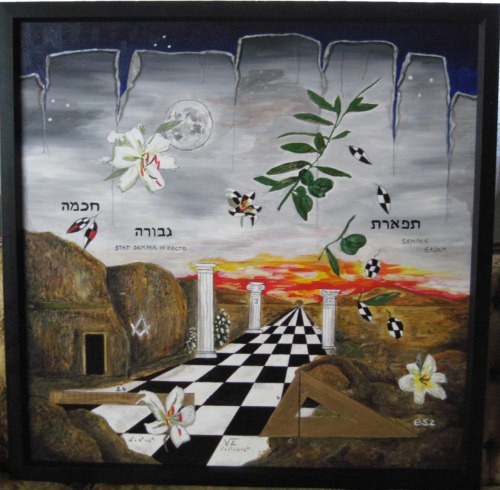
"The acacia thrives in barren,
desert climates, and is specimens have endured for thousands of years
despite drought and famine. It provides shelter for both animals and
people from the scorching heat of the Sun, and its leaves and seeds are
edible. These characteristics make it a symbol of protection and
resilience. The tree also has vicious thorns that conceal the secrets
said to be hidden by the tree. [...]
The acacia tree was around a long time before the
Bible was written, and it was believed that it is what was meant by the
Shittim tree mentioned in the old testament, the timer of which, plated
with gold, was used to make the Ark of the Covenant. One of the trees
speculated to have been used to make Christ's crown of thorns is the
acacia; ancient kings who were sacrificially slaughtered wore these
agonizingly painful crowns. The cross-sometimes described as a
"tree"-upon which Christ was crucified, too, is likely to have been made
from a strong and durable acacia wood. for the Jewish people, the
acacia was so sacred that it would never be used for mundane purposes
such as furniture.
One
of the foremost symbols in freemasonry, a spring of acacia leaves is
laid on the coffin at the funerals of Freemasons in memory Hiram Abiff,
builder of king Solomon's Temple. Hiram's story of betrayal echoes that
of Christ and is one of the main tenets of freemasonry. Hiram had the
sprig of acacia laid on his grave as a si8gn not only of the death and
resurrection, but as a reminder that like the tree, Hiram refused to
divulge certain secrets. its evergreen leaf is a symbol of immortality
of the soul, and the acacia, as a symbol of incorruptibility,
signifies the purity of Hiram's soul.
The Greek word for "innocence"-akakia-
is the same as for the tree. For Freemasons, again, this is particularly
apposite since Hiram was also innocent, preferring to die rather give
out the password that could have given his assassins the status of
Master Mason. The tree was also the symbol of the Goddess AL'Uzza who
presides over birth and death, the changing seasons, the planets, and
the stars." (ISS) See Ginko, Strawberry and Rose for further related images (posts forthcoming).
When getting to know the Beatles, you will encounter many strange
seeming things, some of which might seem absurd in context, others will
just be ubiquitous or suggest a deeper meaning not immediately apparent
on the surface. Part of getting to understand the Beatles Mysteries
begins with learning to read between the lines, backwards, inverse or
upside-down. Here I will begin to examine some of the Beatles symbols,
iconography and lyrics in order to flesh out deeper meanings behind what
appears on the surface to be a disordered raft of psychedelia and Lewis
Carroll-ian imagery.
I will be getting many of my interpretations from the books,The Illustrated Signs & Symbols Sourcebook: An a to Z Compendium of over 1000 Designs by Adele Nozedar (2008), (Hereafter ISS). or Mark O'Connell and Raje Airey'sThe Complete Encyclopedia of Signs & Symbols. 2007, (Hereafter CESS). Other internet sourced information will be linked to, or cited, for your own verification. Also- 1,001 Symbols: An Illustrated Guide to Imagry and its Meaning, by Jack Tresidder, Chronicle Books. 2003.(Hereafter 1,001S)
I'd
like to briefly introduce the author of my main research source: "Adele
Nozedar has long been fascinated by the power of symbols and visual
signs, which led her to the formal study of alchemy. As well as being a
researcher, Adele has exhibited photographic work and runs a studio in
Wales." I was particularly interested in drawing references from her
book because of her British cultural heritage and focus, which I find
most important for trying to understand the worldview and cultural
perspectives of the Beatles members.
I'm not
suggesting, necessarily that the Beatles meant to infer the symbolic
meanings of all these things (One can mention an apple without meaning
anything about sexuality), but I do believe that at least John was very
aware of imagery in art and the language of symbols through his
education in the art academy, and his interests in authors like James
Joyce and Lewis Carroll.
"In Nature's Temple, living pillars rise Speaking sometimes in the words of abstruse sense Man walks through woods of symbols, dark and dense, Which Gaze at him with fond familiar eyes.
Like distant echoes blent in the beyond In unity, in a deep darksome way, Vast as black night and vast as splendid day, Perfumes and sounds and colors correspond"
- Charles Baudelaire
(Wikipedia: "April 9, 1821 – August 31, 1867 Baudelaire was a French poet who produced notable work as an essayist, art critic, and pioneering translator of Edgar Allan Poe. His most famous work, Les Fleurs du mal (The Flowers of Evil), expresses the changing nature of beauty in modern, industrializing Paris during the 19th century." Side Note: Looking
into Charles Baudelaire leads to some fascinating insights, and "The
Flowers of Evil" is a very worthwhile poetry collection to look into.
Flowers play a prominent role in Beatles imagery, and his Poem "Le
Soleil/The Sun" is an interesting poem to have in mind while looking
into the Sun references made by the Beatles, both as a group and in
several individuals' songs (Ou est le Soleil?)
"Whether
consciously or unconsciously, the symbol carries the sense of joining
things together to create a whole greater than the sum of its parts, as
shades of meaning accrue to produce a complex idea."- Mark O'Connell and Raje Airey, The Complete Encyclopedia of Signs & Symbols. 2007.
We'll
begin here, but look forward to more to come in the future! I
originally intended to post this all as one post (the introduction and
the entries), but after completing it, I found it was far too long for
anyone's patience...so little bites, in alphabetical order, to follow!